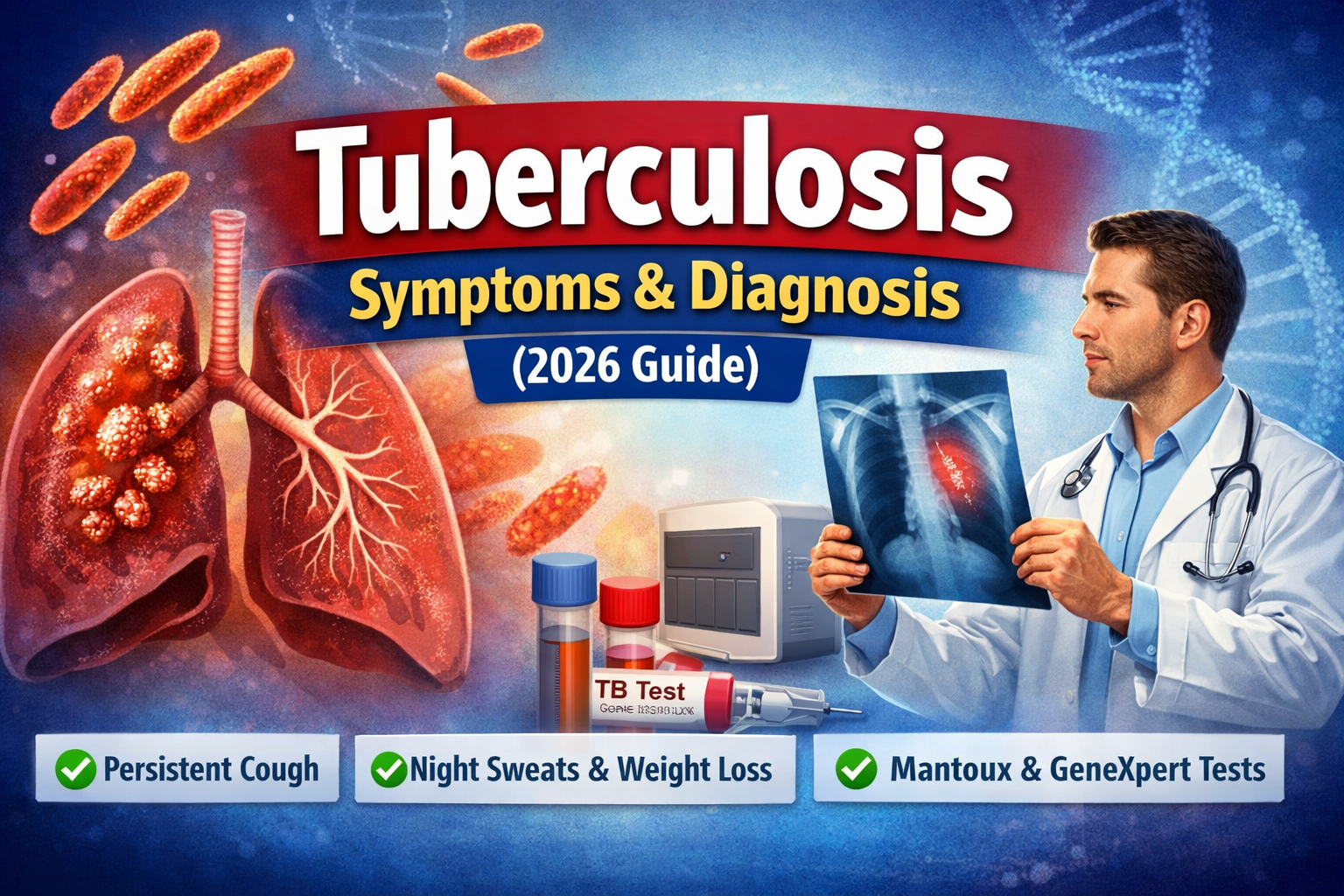
Tuberculosis may sound like a disease of the past, but the numbers tell a different story. The World Health Organization reported approximately 10.7 million new TB infections and over
1.2 million deaths in 2024 alone, cementing its status as the world’s deadliest single infectious disease. Yet most people remain unaware of how TB develops, what warning signs to watch for, and how modern medicine detects it.
This guide covers everything you need to know about tuberculosis symptoms and diagnosis, in plain language.
What Is Tuberculosis?
Tuberculosis is a bacterial disease caused by Mycobacterium tuberculosis, a slow-growing, highly resilient pathogen that primarily attacks the lungs. It spreads person-to-person through the air, when someone with active TB coughs, sneezes, laughs, or speaks, microscopic infectious droplets are released. Breathing them in can allow the bacteria to establish itself in your lungs.
Critically, exposure doesn’t always mean illness. TB presents in two distinct forms:
Latent TB
The bacteria lie dormant inside the body, causing no symptoms and posing no risk of transmission. Millions carry latent TB without ever knowing. However, if the immune system becomes compromised, due to conditions like HIV, diabetes, or aging, dormant bacteria can reactivate and progress to active disease.
Active TB
When the immune system can no longer suppress bacterial multiplication, the infection becomes active, symptomatic, and contagious. This is the form requiring urgent medical attention.
Tuberculosis Symptoms: What Does TB Feel Like?
One of the reasons TB spreads so effectively is how easily its early symptoms are dismissed. A persistent cough, mild fatigue, low-grade fever — these overlap with countless everyday illnesses. By the time someone recognizes the pattern, significant transmission may have already occurred.
Pulmonary Tuberculosis Symptoms (Lung TB)
Pulmonary tuberculosis — TB confined to the lungs — is the most prevalent form.
Key pulmonary tuberculosis symptoms include:
1. A Chronic, Persistent Cough
The defining symptom of pulmonary TB is a cough lasting three weeks or longer. It often starts dry before producing mucus or phlegm. In more advanced stages, patients may cough up blood or blood-streaked sputum (hemoptysis) — a serious warning sign that demands immediate evaluation.
2. Chest Pain
Inflammation of lung tissue and the surrounding pleural lining can cause dull, sharp, or tight chest pain — often worsening during deep breathing or coughing. This symptom is frequently overlooked but is a meaningful indicator of pulmonary TB.
3. Shortness of Breath
Progressive lung damage can reduce respiratory capacity, making even light physical activity feel labored. If breathlessness develops without an obvious cause, TB should be considered.
Systemic Signs and Symptoms of Tuberculosis
TB affects more than just the lungs. The following systemic signs and symptoms of tuberculosis reflect the body-wide nature of the infection:
4. Persistent Low-Grade Fever
A mild but ongoing fever is among the earliest signs of active TB. Unlike the sharp temperature spikes of influenza, TB-related fever tends to be subtle — just enough to cause persistent discomfort without standing out as alarming.
5. Night Sweats
One of the most recognizable sign symptoms of tuberculosis is profuse nighttime sweating, severe enough to soak through clothing and bedding, regardless of the ambient temperature. Regular episodes of drenching night sweats should prompt a medical consultation.
6. Unexplained Weight Loss
Sudden, unexplained weight loss, often several kilograms over a short period, this is a significant red flag. TB disrupts metabolism and diminishes appetite, causing the body to gradually waste even without deliberate dietary changes.
7. Chronic Fatigue and Weakness
Persistent exhaustion that doesn’t improve with rest is one of the most consistently reported common symptoms of tuberculosis. This isn’t ordinary tiredness — it’s a deep, debilitating fatigue that interferes with routine daily tasks.
8. Loss of Appetite
Alongside weight loss, a sustained disinterest in food is common. Eating may feel effortful even when hunger is present.
Extrapulmonary TB: When the Infection Spreads Beyond the Lungs
TB bacteria can migrate through the bloodstream to organs beyond the lungs — a condition called extrapulmonary tuberculosis. The symptoms of tuberculosis in extrapulmonary cases vary depending on the affected site:
- Lymph node TB: Firm, painless swellings beneath the skin, most commonly around the neck
- Spinal TB (Pott’s Disease): Chronic back pain, restricted spinal movement, and in severe cases, neurological impairment
- TB Meningitis: Intense headaches, confusion, light sensitivity, and neck stiffness
- Renal TB: Blood in the urine and flank or lower back pain
- Joint TB: Swelling and aching in major joints, particularly the hips and knees
Because extrapulmonary TB can mimic many other conditions, accurate diagnosis requires thorough clinical evaluation.
How Is Tuberculosis Diagnosed?
Tuberculosis diagnosis is a multi-step process. TB’s gradual onset and symptom overlap with other respiratory illnesses make it difficult to identify without targeted testing. Fortunately, modern diagnostic tools are both sensitive and increasingly accessible.
1. Medical History and Physical Examination
Diagnosis begins with a detailed clinical assessment. A physician will inquire about symptom duration, weight changes, night sweats, and any known TB exposure. Lung auscultation and lymph node examination follow, helping to determine whether formal TB testing is appropriate.
2. Tuberculin Skin Test (Mantoux Test)
A standard TB screening method, the Mantoux test involves a small intradermal injection of tuberculin protein. The injection site is assessed 48–72 hours later — a raised, firm bump of sufficient size constitutes a positive reaction, suggesting prior TB exposure. Limitations include an inability to distinguish latent from active infection, and susceptibility to false results in BCG-vaccinated individuals.
3. Interferon-Gamma Release Assay (IGRA)
This blood-based test measures the immune system’s response to TB-specific proteins under laboratory conditions. Tests such as QuantiFERON-TB Gold are increasingly preferred due to their higher specificity and unaffected results in BCG-vaccinated patients. A positive IGRA confirms TB infection but requires additional testing to determine disease activity.
4. Chest X-Ray
An essential tool in pulmonary tuberculosis diagnosis, chest imaging can reveal characteristic abnormalities — patchy infiltrates, upper lobe shadowing, or pulmonary cavities — associated with active TB. While widely available and fast, X-ray findings must be corroborated by laboratory testing for confirmation.
5. Sputum Smear Microscopy and Culture
Considered the diagnostic gold standard, sputum analysis involves direct microscopic examination for TB bacilli and laboratory culture to confirm Mycobacterium tuberculosis. Culture methods are highly accurate but time-intensive — results from liquid culture media typically take 10–21 days, while solid media can require up to six weeks.
6. CBNAAT / GeneXpert (Molecular Testing)
The Cartridge-Based Nucleic Acid Amplification Test (CBNAAT) is a major leap forward in tuberculosis diagnosis. This molecular test simultaneously detects TB bacteria and identifies Rifampicin resistance — a key marker for drug-resistant TB — within hours. It has transformed diagnostic capacity in resource-constrained healthcare settings.
7. CT Scan
When chest X-rays produce inconclusive results, computed tomography provides detailed, cross-sectional lung imaging. CT scans are particularly valuable for identifying subtle pulmonary changes and for diagnosing extrapulmonary TB in organs not captured by standard X-ray.
8. Biopsy
For suspected extrapulmonary TB involving lymph nodes, bone, or soft tissue, a tissue biopsy may be collected. Laboratory analysis of the sample identifies TB bacteria or characteristic granulomatous inflammation, confirming the diagnosis.
What Happens If TB Goes Untreated?
Untreated active tuberculosis carries a high mortality risk — historical evidence suggests roughly two-thirds of untreated cases are fatal. Modern antibiotic regimens are highly effective, but treatment typically spans six to nine months and must be completed in full. Premature discontinuation — even once symptoms subside — is a primary driver of drug-resistant TB strains, which are significantly harder and more expensive to treat.
TB is curable. However, that outcome depends entirely on timely diagnosis and uninterrupted treatment.
For residents of Delhi NCR, the region is home to some of the country’s most experienced tuberculosis specialists, equipped with advanced diagnostic facilities including GeneXpert molecular testing and comprehensive treatment programs. If you’re experiencing any of these symptoms, consulting the best tuberculosis specialists in Delhi ensures access to accurate diagnosis, personalized treatment plans, and ongoing monitoring for successful recovery.
Conclusion: Don’t Ignore the Signs
Tuberculosis is not a historical footnote. It remains one of the most widespread and deadly infectious diseases in the world today and one of the most treatable, when caught early.
If you’ve had a cough lasting more than three weeks, experienced unexplained weight loss, been waking up with heavy night sweats, or have been feeling persistently unwell without a clear cause, take it seriously.